- 10518 Cadillac St., Pineville, NC 28134
-
Monday – Friday: 7:30AM – 6:00PM | SAT: 7:30AM – 2:00PM | SUN: Closed
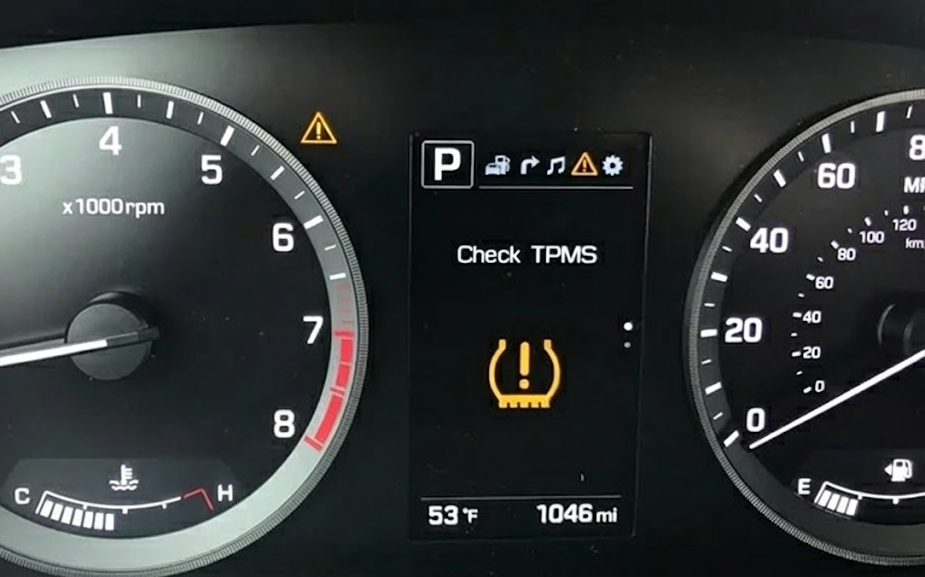
That yellow horseshoe icon with the exclamation point suddenly glowing on your dashboard can definitely spark some worry, especially when you’re backing out of your driveway on the first genuinely chilly morning of fall. If you’re in Pineville or anywhere around Charlotte and you just saw your Hyundai’s tire pressure monitoring system light come on, take a deep breath—chances are overwhelmingly good that it’s just the weather, not a dangerous tire problem. The drop from those comfortable mid-70s September evenings down to crisp 50-degree October mornings triggers this warning in thousands of vehicles across the Charlotte metro area every single year.
Charlotte’s weather creates a really predictable pattern each fall that catches drivers off guard. In late September, you’re still comfortably cruising around Pineville, Matthews, and Fort Mill with daytime highs in the low 80s and overnight temperatures hovering around 65 degrees. Then suddenly, usually around mid-October, morning temperatures plummet to the low 50s or even upper 40s, creating that 20-to-30-degree overnight temperature swing. This dramatic temperature drop directly affects your tire pressure through a basic scientific principle—when air gets colder, it contracts and reduces pressure proportionally.
Your tires typically lose about one pound per square inch (PSI) for every 10-degree drop in temperature, according to tire safety guidelines from the National Highway Traffic Safety Administration. So when Charlotte goes from 75 degrees during the day to 48 degrees overnight—a 27-degree swing that’s totally common in October—your tires can easily drop 2-3 PSI just from that temperature change alone. Most Hyundai vehicles illuminate the TPMS warning light when tire pressure drops about 25 percent below the recommended level, which means even a perfectly healthy tire that was properly inflated yesterday can trigger the warning this morning. The good news is that this isn’t actually indicating tire damage—it’s simply alerting you that the air inside has contracted, which is completely normal and easily addressed with a quick complimentary tire health check at our service center.
The short answer is yes, you can safely drive with the light on for a brief period, but you definitely shouldn’t ignore it for days or weeks. When the TPMS light stays solid yellow (not blinking), it means one or more of your tires has lower pressure than recommended—typically around 5-8 PSI below where it should be. Driving on underinflated tires reduces your fuel efficiency, causes uneven tread wear, and makes your Hyundai handle less responsively, particularly when navigating curves or making sudden stops in heavy traffic on I-485 or Highway 51 through Pineville.
However, if your TPMS light is blinking for about 60 seconds when you first start your vehicle and then stays solid, that’s a completely different situation. A blinking TPMS light indicates a malfunction with the monitoring system itself—maybe a faulty sensor, a dead sensor battery, or an issue with the system’s communication—and that requires professional diagnosis right away. In that case, you’re essentially driving without any tire pressure monitoring at all. That’s why it’s smart to swing by South Charlotte Hyundai Service Center in Pineville as soon as conveniently possible.
If you’re driving a newer Hyundai model like a 2024 or 2025 Tucson, Santa Fe, Palisade, or Elantra, you’ve got Direct TPMS technology. Unlike older indirect systems, Direct TPMS uses individual sensors inside each wheel that transmit real-time pressure readings directly to your digital instrument cluster. This means you can see the exact PSI in each of your four tires right on your dashboard, taking all the guesswork out and letting you know immediately which tire needs attention.
To access this information, navigate through your instrument cluster using the steering wheel controls, selecting “User Settings” or “Tire Pressure.” Compare those numbers to the recommended tire pressure on the sticker inside your driver’s door jamb—usually around 33-35 PSI for most Hyundai SUVs and sedans. Plus, many newer models automatically reset the TPMS light once you’ve inflated the tires and driven a few miles.
You’ve probably seen the coin-operated air compressors at gas stations around Charlotte, Matthews, and Concord. Technically, yes, you can add air to your tires at most gas stations, though it’s not always hassle-free. Those machines frequently require quarters or credit cards, the hoses are often stiff and awkward to maneuver, and the built-in pressure gauges aren’t always reliable or easy to read accurately.
More importantly, there’s a practical difference between just adding some air and actually getting your tire pressure system properly calibrated. If you simply pump up your tires at a gas station without checking the exact PSI recommended for your specific Hyundai model, you might overinflate them (which causes harsh ride quality) or underinflate them (which doesn’t fully solve the problem). And while the TPMS light usually resets itself after driving, some stubborn warning lights or older systems may require a manual reset procedure to clear the alert.
That’s exactly why thousands of Charlotte-area Hyundai owners choose to simply schedule a quick pressure adjustment at South Charlotte Hyundai Service Center instead. Our certified technicians will check all four tires with professional-grade equipment, inflate them to the exact manufacturer-recommended PSI, inspect your tread depth and overall tire condition, and properly reset your TPMS system so that warning light goes off and stays off. Plus, if we do happen to spot a legitimate issue like a nail in your tread or a valve stem that needs replacement, we can address it immediately.
While regular compressed air works perfectly fine for keeping your tires properly inflated, you might have heard about nitrogen tire inflation and wondered whether it’s worth considering for your Hyundai. Nitrogen offers some genuine advantages, particularly for drivers in Charlotte where we experience those dramatic seasonal temperature swings that trigger TPMS warnings in the first place. Nitrogen molecules are actually larger than oxygen molecules, which means they leak through tire rubber more slowly over time. More importantly for our purposes, dealer-grade nitrogen is “dry” and lacks the humidity found in standard compressed air. This moisture causes erratic pressure changes, so nitrogen helps your tire pressure stay more stable when overnight temperatures drop from 70 degrees to 50 degrees.
Nitrogen inflation won’t completely eliminate pressure changes from temperature drops—physics is still physics, after all—but it does significantly reduce the severity of those pressure swings. Many drivers who switch to nitrogen fill find that their TPMS light stops coming on during those first cold snaps each fall, simply because their tire pressure doesn’t drop quite as dramatically overnight. At South Charlotte Hyundai Service Center, we offer nitrogen tire inflation as an option for customers who want that extra level of performance and convenience. Check out our current service coupons to see if we’re running any promotions on nitrogen fills or tire services.
| Warning Pattern | What It Means | Recommended Action | Urgency Level |
|---|---|---|---|
| Solid yellow light (steady) | One or more tires are 25% below recommended pressure | Check tire pressure and inflate to proper PSI within a few days | Moderate – safe to drive short distances |
| Blinking for 60 seconds, then solid | TPMS system malfunction – sensor or communication issue | Visit service center for diagnostic scan soon | Moderate – you have no pressure monitoring |
| Light comes on immediately after starting | Pressure dropped overnight due to temperature change | Most common in October – check and inflate tires | Low – typical seasonal occurrence |
| Light comes on while driving | Possible rapid air loss from puncture or damage | Pull over safely, inspect tires, call for assistance if needed | High – potential tire failure in progress |
| Light won’t turn off after inflation | System needs manual reset or sensor replacement | Visit service center for proper reset procedure | Moderate – tires are fine but system needs attention |
Living in the Pineville and Charlotte area means dealing with weather that’s uniquely challenging for tire pressure. We experience dramatic seasonal transitions—September with highs in the mid-80s, October mornings suddenly dropping into the 40s. This creates exactly the conditions that trigger TPMS warnings across thousands of Hyundai vehicles simultaneously. Understanding this local pattern helps you anticipate when you’re most likely to see that warning light illuminate.
South Charlotte Hyundai Service Center understands exactly what local drivers need. We know that October temperature drop catches everyone by surprise, busy schedules make gas station air pumps a hassle, and drivers want quick solutions. That’s why we make tire pressure checks complimentary and fast, getting you back on the road to Ballantyne, Indian Trail, or Huntersville without disrupting your day.
Q: How do I reset the TPMS light on a 2024 or 2025 Hyundai?
A: Most newer Hyundai models with Direct TPMS automatically reset the warning light once you’ve properly inflated all four tires and driven the vehicle for several miles. If your light doesn’t automatically reset after driving, your vehicle may require a manual reset procedure using the instrument cluster menu or a professional diagnostic tool, which our certified technicians can handle quickly during your visit.
Q: Why is my tire pressure light blinking instead of staying on?
A: A blinking TPMS light indicates a system malfunction rather than just low tire pressure. The most common causes include a dead sensor battery, a damaged sensor from hitting a pothole, or a communication issue. When the light blinks for about 60 seconds and then stays solid, your TPMS system needs professional diagnosis because you won’t receive warnings if you develop an actual tire pressure problem.
Q: Should I put Nitrogen in my tires to stop the light from coming on?
A: Nitrogen inflation can definitely help reduce the frequency of TPMS warnings during Charlotte’s seasonal temperature swings. Because nitrogen lacks the internal moisture that causes erratic pressure fluctuations, your tire pressure stays more stable when overnight temperatures drop. Many Charlotte-area drivers find it significantly reduces those cold-morning TPMS warnings.
Q: What is the correct PSI for a Hyundai Tucson or Santa Fe in winter?
A: The correct tire pressure for your specific Hyundai doesn’t actually change between summer and winter—you should always maintain the PSI recommended by Hyundai, which you’ll find on the tire information sticker inside your driver’s door jamb. For most Hyundai Tucson models, that’s typically 33-35 PSI. The key is checking and adjusting your pressure more frequently during seasonal transitions because cold weather causes pressure to drop naturally.
Q: Can I drive from Pineville to Uptown Charlotte with the TPMS light on?
A: Yes, you can safely make that short drive with a solid TPMS warning light, especially if you know it just came on this morning due to the temperature drop. The light indicates your tires are underinflated by 25 percent or more, which typically means they’re 5-8 PSI low rather than completely flat. You’ll want to avoid aggressive driving and get the pressure corrected within a day or two to prevent uneven tire wear.
That yellow horseshoe warning light doesn’t have to ruin your morning commute or cause unnecessary stress about your Hyundai’s safety. The certified technicians at South Charlotte Hyundai Service Center in Pineville have helped thousands of Charlotte-area drivers solve this exact problem, whether they’re driving a brand-new 2025 Palisade or a reliable 2018 Elantra. We’ve got the professional diagnostic equipment, genuine Hyundai knowledge, and specialized training to handle any TPMS issue efficiently and correctly.
With Charlotte’s October mornings consistently dipping into the low 50s and sometimes even the upper 40s, underinflated tires wear unevenly, reduce your fuel economy, and compromise your Hyundai’s handling when you need it most. Our comprehensive diagnostic approach identifies exactly what your tires and TPMS system need, ensuring you get appropriate service that solves the problem permanently.
Click here to schedule your TPMS inspection and get back to worry-free driving!
Or visit us at 10518 Cadillac Street, Pineville, NC 28134, where our certified technicians are ready to ensure your Hyundai’s tire pressure monitoring system keeps you safe throughout North Carolina’s demanding seasonal weather changes.