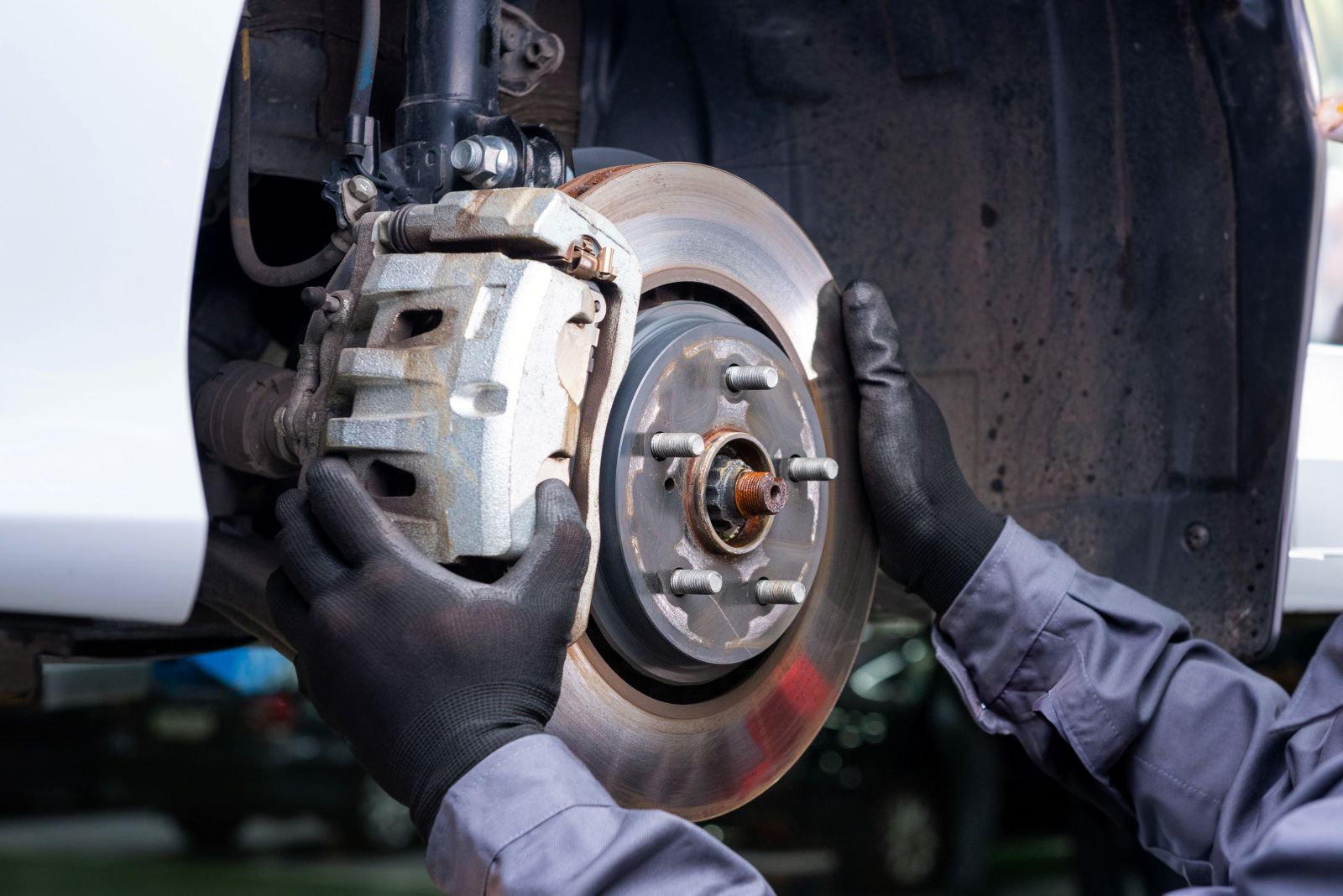
Brake pads wear down slowly enough that it is easy to put off, right up until it costs more than it needed to. The benchmark most Hyundai technicians use: once pads are down to about 3 to 4 millimeters, it is time to plan service. That is the point where waiting tends to turn a straightforward pad replacement into a more expensive repair.
Why plan Hyundai brake service at 3 to 4 millimeters?
New pads give the rotor a clean, consistent surface to work against. As they thin down, that consistency goes first, often before you notice anything from the driver’s seat. By 3 to 4 mm the margin is small enough that an inspection makes sense, and there is still time to keep it to a pad replacement.
When you are ready to get it checked, you can schedule brake service with South Charlotte Hyundai directly.
What does each Hyundai brake pad thickness range actually tell you?
The thickness number only means something if you know what to do with it. Here is a simple way to read it.
| Brake pad thickness (approx.) |
What it usually means |
What to do next |
| 8 mm or more |
Plenty of pad life left |
Recheck during routine service |
| 5 to 7 mm |
Mid life range |
Monitor and recheck soon, especially with heavy commuting |
| 3 to 4 mm |
Near end of pad life |
Plan service and replace pads soon |
| 2 mm or less |
Very low, higher risk to rotors |
Schedule service promptly |
This is why the 3 to 4 mm benchmark is useful. It is early enough to protect rotors and hardware, but not so early that you are replacing pads before they need it.
Want to know how much pad life is left on your Hyundai brakes?
An inspection tells you exactly where things stand before rotor wear becomes the problem.
Schedule a brake inspection
What are the signs you may need Hyundai brake service soon?
Most brake wear announces itself before it becomes a safety issue. A few things worth paying attention to:
- A squealing sound when you press the brake pedal
- Grinding or scraping that happens during braking
- Vibration you can feel through the steering wheel or the pedal itself
- The car drifting to one side when you slow down
- The pedal responding differently than it normally does
Can you wait if your Hyundai brake pads still feel fine?
A lot of drivers hold off because the car still stops and there is no warning light. The problem is what happens after pads get too thin. What usually drives the cost up is rotor wear. Catching it at 3 to 4 mm is how you avoid that.
What else gets checked during a Hyundai brake service visit?
There is more to a brake visit than pulling the old pads and putting new ones in. The technician measures thickness on all four wheels, checks the rotors for wear or scoring, and looks at the calipers and hardware to make sure everything is functioning the way it should. That gives you a reliable picture of where the whole system stands, not just the pads.
How do driving conditions around South Charlotte affect brake wear?
Brake pad life comes down to how many times you use the brakes and how hard. Someone doing mostly highway driving between Charlotte and Rock Hill will see very different wear than someone running short errands through Pineville or sitting in stop-and-go on I-485 every day. More stops and harder braking means pads go faster, and that is worth keeping in mind when you decide when to book service.
What should you know about Hyundai brake service pricing and specials?
Brake job pricing varies because not every visit is the same. Which axle needs attention, whether the rotors need replacing or resurfacing, and your specific Hyundai model all factor into the final number. The comparison that actually matters is what is included in the service, not just the price on its own. If you want to check what offers are available before you book, start here: view current service specials.
What people also ask about Hyundai brakes
Is 3 to 4 millimeters the point where brake pads should be replaced?
It is the right window to schedule service. The pads still have a little life left, which means you have time to book it on your schedule rather than urgently. Wait much longer and rotor wear becomes a real possibility.
Do brake pads usually wear faster in the front or the rear?
Front pads tend to go faster because the front brakes do more of the stopping work, but the exact rate varies by model and how you drive. Both axles should be checked rather than assuming the rear is fine.
Do you always need to replace rotors when you replace brake pads?
Not always. Rotors can often be reused if they are in good shape, but that needs to be verified. An inspection before the job tells you what is actually needed rather than guessing.
What is the difference between squealing and grinding?
Squealing is typically the wear indicator doing its job, telling you the pads are getting low. Grinding means metal is already making contact, which puts the rotors at risk. Grinding should not be ignored.
How often should brakes be inspected?
Once or twice a year is reasonable for most drivers, and any routine service visit is a natural opportunity to check. If you notice noise or a change in pedal feel, do not wait for the next scheduled visit.
Not sure where to start with your Hyundai brakes?
Getting the pads measured is the fastest way to remove the guesswork. If they are fine, you know. If they are getting close, you have time to plan it rather than react to it.
When you are ready, you can schedule brake service and also take a look at current service specials to see if there is an offer that applies.